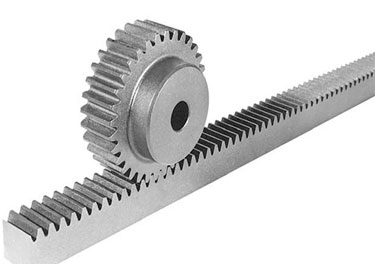
Racks and Pinion Manufacturer

Racks and Pinion

We are leading racks and pinion manufacturer in India. We are comprehensively producing fine quality racks and pinion in varying sizes as per the requirements. The use of a rack and pinion gear system is a very efficient method of converting rotational motion to linear motion. The rotational or linear travel ratio of the gear system can be changed according to the demanded parameters by adjusting the diameters of the rack or the pinion. The force variation can be programmed by adjusting the size of the pinion.

Nowadays, the most common application for a rack and pinion assembly is in vehicle steering systems, although it is also utilized in a variety of other applications. The quality, strength, and service life of the racks and pinions we produce are incomparable. We have worked in accordance with global quality standards to provide hassle-free rack and pinion service in our clients' industrial facilities. The offerings are available at consistently fair prices and we assure timely deliveries for the same throughout India as well as in nations abroad.


FAQs for Racks and Pinion

1. What is a Racks and Pinion? + A Racks and Pinion is a mechanical component with teeth that mesh with another toothed part to transmit torque and change speed, direction, or power in machinery.
2. Where are Racks and Pinions used? + Racks and Pinions are commonly used in gearboxes, heavy machinery, automotive systems, conveyors, industrial drives, and various power transmission systems.
3. What are the main benefits of a Racks and Pinion? + The main benefits include efficient power transmission, high load-carrying capacity, precise speed control, durability, and smooth mechanical operation.
4. How can I choose the right Racks and Pinion? + Selecting the right gear depends on parameters like load capacity, tooth profile, gear ratio, material specifications, speed requirements, and mounting configuration.
5. How can I maintain a Racks and Pinion? + Proper lubrication, regular alignment checks, and monitoring for tooth wear or chipping are key to maintaining gears and extending their operational lifetime.